











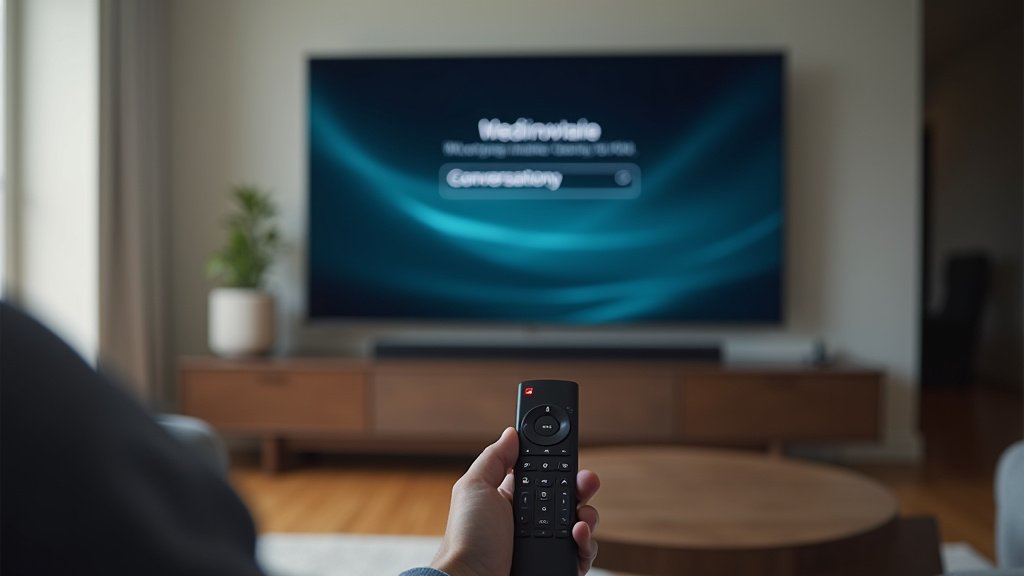
TiVo has officially launched ‘Agent,’ a generative AI-powered interface designed to revolutionize how viewers discover and engage with entertainment. By replacing traditional, static menu navigation with a fluid, conversational dialogue, the company is attempting to fundamentally alter the television viewing experience. This launch marks a critical evolution for Xperi Inc., TiVo’s parent company, as it pushes deeper into the ‘TiVo Broadband’ market, providing service providers with a sophisticated tool to combat the fragmentation currently overwhelming streaming consumers.
Key Highlights
- Conversational Search: Agent TiVo uses advanced generative AI to understand natural language, allowing users to ask complex questions like “What’s a thriller I can watch with my kids?” rather than searching by static keywords.
- Cross-Platform Discovery: The system creates a unified view across disparate streaming services, deep-linking into apps to play content immediately without requiring the user to navigate separate silos.
- Solving Choice Paralysis: By acting as a concierge, the AI curates personal recommendations, reducing the time users spend scrolling through endless menus to find something they actually want to watch.
The Evolution of the Electronic Program Guide
For decades, the television interface has remained relatively stagnant. We moved from printed TV guides to on-screen grids, then to basic search bars, and eventually to algorithmic carousels. However, despite these advancements, the “choice paralysis” phenomenon has only worsened. With the proliferation of streaming services—Netflix, Disney+, Hulu, Max, and dozens of FAST (Free Ad-Supported Streaming TV) channels—the average consumer spends more time deciding what to watch than actually watching it.
TiVo’s introduction of Agent is a strategic move to fix this friction. Unlike legacy search tools that rely on rigid metadata tagging (Genre: Action, Year: 2023), Agent leverages Large Language Models (LLMs) to understand context. If a user asks for a “movie about space that feels like a documentary,” the AI can parse through descriptions, user reviews, and thematic data points that standard search filters would miss. This shift transforms the TV remote from a navigational tool into a communication device.
Breaking Down the ‘Agent’ Infrastructure
At its core, Agent is a manifestation of Xperi’s broader strategy to position the TiVo Operating System (TiVo OS) as an essential aggregator for pay-TV operators and internet service providers. By embedding a conversational layer directly into the platform, operators can offer a “smart” home experience that feels more like an Apple- or Google-grade interface.
Technically, the system relies on a combination of proprietary metadata and external generative AI models. This allows TiVo to bridge the gap between their comprehensive entertainment database—which has been the gold standard for TV metadata for years—and the predictive power of modern AI. The result is a system that understands the relationship between content, actors, and user habits, creating a “knowledge graph” that is tailored to the specific viewer.
The Competitive Landscape of TV OS
The move puts TiVo in direct competition with the “Big Three” of the living room: Amazon (Fire TV), Roku, and Apple (tvOS). While Roku has focused on simplicity and Amazon on e-commerce integration, TiVo is betting on intelligence.
1. The Aggregation War: Consumers are tired of switching between apps. TiVo is positioning Agent as the “universal layer” that sits on top of all these apps, effectively making the underlying streaming provider less relevant. If Agent TiVo can successfully launch content from any app with a single voice command, the platform becomes the primary gateway for all television consumption.
2. The Data Advantage: Because Xperi owns the metadata, they have a distinct advantage in training their AI. While others rely on scraped data, TiVo’s database has been curated for decades, providing a higher “ground truth” for the AI to reference, leading to more accurate and less “hallucinatory” recommendations.
3. Monetization and Future-Proofing: For ISPs and cable providers, churn is the biggest enemy. If a subscriber can find shows they love instantly, they are more likely to stay subscribed. Agent TiVo is effectively a retention tool, turning a “dumb pipe” of internet data into a high-value entertainment hub.
Privacy and the Human Element
With any AI integration in the home, questions regarding privacy are inevitable. TiVo has emphasized that while the AI learns user preferences, the processing of this data is designed to be contained within the ecosystem of the OS. As conversational AI becomes the standard, the industry will need to navigate the fine line between helpful personalization and intrusive data tracking. The success of Agent will likely depend on consumer trust—does the user feel that the TV is helping them, or is it “watching” them?
As we look toward the future of entertainment, Agent TiVo represents the next logical step. The era of the grid is fading, replaced by the era of the assistant. For the casual viewer, it may simply mean getting to a movie faster. For the tech industry, it represents the final transition of the television into a fully realized, AI-driven intelligent device.
FAQ: People Also Ask
What is the primary difference between Agent TiVo and standard voice search?
Standard voice search typically looks for literal keyword matches in title or actor fields. Agent TiVo utilizes generative AI to understand intent and context, enabling it to answer complex, descriptive questions and provide tailored recommendations.
Does Agent TiVo work with all streaming apps?
TiVo’s strategy involves deep-linking into the major streaming ecosystems. While integration varies by device and app provider cooperation, the goal is a universal search capability that launches content directly, bypassing the need to navigate individual app menus.
Is Agent TiVo available on older hardware?
Availability depends on the specific TiVo implementation. Because the AI functionality requires significant backend processing and, in some cases, modern chipset capability, it is primarily targeted at new TiVo OS-powered devices and partner operator hardware.
How does TiVo manage privacy with conversational AI?
TiVo notes that its AI implementation focuses on anonymized usage patterns to improve recommendation engines, with the goal of providing a personalized experience without compromising individual user identity, adhering to the company’s established data privacy policies.
More Stories
Lady Gaga Welcomes Daughter Rose Bean Polansky
Ranbir & Alia Launch Major 20-School Mumbai Makeover
Kevin Hart Confirmed to Host the 99th Academy Awards