











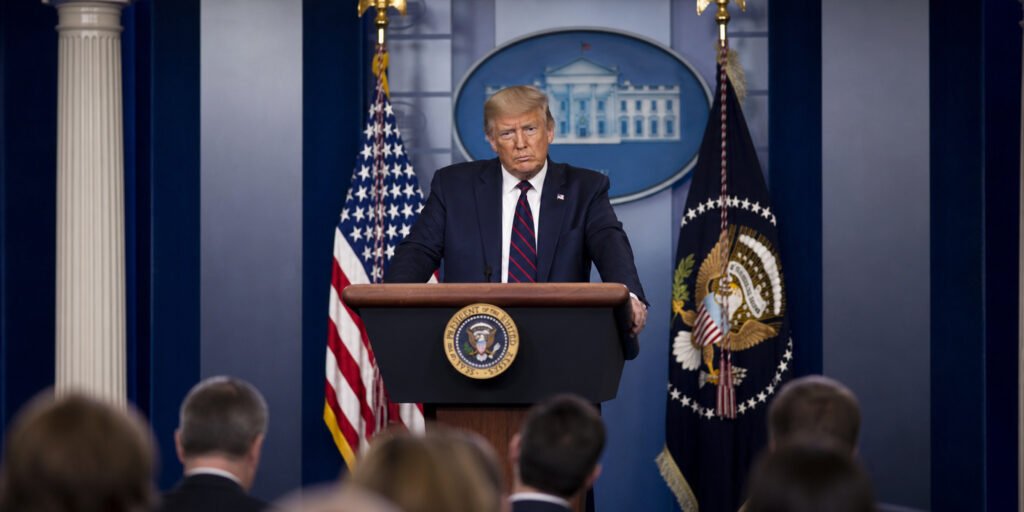
President Donald Trump has issued a stark warning to Tehran, signaling that the current diplomatic window is on the verge of total collapse. Following a decisive rejection of the latest US-brokered proposals by Iranian leadership, the administration has pivoted toward a posture of active deterrence, with the President indicating that the resumption of airstrikes remains on the table if negotiations fail to yield a breakthrough by the end of the week. This shift marks a significant escalation in a region already grappling with an uptick in drone activity targeting key infrastructure in Saudi Arabia and Israel.
Key Highlights
- Ultimatum Issued: President Trump has officially warned that the US will resume targeted airstrikes if current diplomatic efforts do not result in a verifiable breakthrough.
- Negotiation Deadlock: Iran has formally rejected the latest US proposal, describing it as an infringement on sovereign defense capabilities.
- Regional Destabilization: New reports confirm an increase in drone attacks across Saudi Arabia and Israel, underscoring the failure of the temporary pause in direct US military action to curb regional proxy aggression.
- CENTCOM Readiness: US Central Command (CENTCOM) has reportedly been placed on heightened alert as the threat of a return to active conflict looms.
The Fracturing Diplomatic Corridor
The current diplomatic landscape, which many analysts hoped would provide a pathway to regional stability, is now characterized by deep-seated skepticism and hardening positions. The rejection of the US proposal—a multi-layered agreement intended to trade sanctions relief for a permanent cessation of state-sponsored proxy activities—has effectively stalled the momentum built over the past three months. According to intelligence briefings released on July 28, 2026, Tehran’s leadership viewed the transparency requirements regarding their ballistic missile program as non-negotiable red lines, a sentiment that has led to the current impasse.
For the Trump administration, the strategy of ‘Maximum Pressure 2.0’ appears to have reached its tactical limit. The President’s rhetoric on Monday morning suggests a transition from carrot-and-stick diplomacy back to a policy of decisive kinetic response. This, however, is a high-stakes gamble. By setting a hard deadline for the resumption of airstrikes, the administration is attempting to force a capitulation, but the historical precedent suggests that such pressure often invites further asymmetric responses rather than concessions.
The Shadow War: Drone Attacks and Regional Security
The security environment across the Middle East has deteriorated rapidly despite the US’s temporary pause in direct military engagement. The Saudi Defense Ministry has reported a 40% increase in short-range drone incursions over the past 72 hours, targeting oil processing facilities and critical infrastructure. Simultaneously, Israeli defense officials confirmed that interceptor systems were activated along the northern border to neutralize incoming unmanned aerial vehicles (UAVs) originating from southern territories.
This trend suggests that even in the absence of direct US airstrikes, the conflict has decentralized. The proxy groups affiliated with the Islamic Revolutionary Guard Corps (IRGC) appear to be utilizing the diplomatic window not to prepare for peace, but to saturate regional defense networks. The implications for the US are significant: if the administration proceeds with airstrikes, it must contend with a more entrenched and active drone network that is currently testing the limits of regional missile defense batteries.
Economic Impacts and Future Projections
The uncertainty surrounding the potential for resumed airstrikes has triggered immediate volatility in global energy markets. Brent crude prices surged by 4.2% in early trading on July 28, reflecting market anxiety over the potential for a renewed maritime blockade in the Strait of Hormuz.
Looking toward the future, there are three primary angles that experts are watching closely:
1. The Energy Market Shock: A return to airstrikes could cause a sustained disruption in supply chains, forcing OPEC+ to reconsider production caps to stabilize prices.
2. The Intelligence Failure: Critics argue that the reliance on back-channel negotiations failed to account for the internal political shifts within the Iranian parliament, suggesting that the current US strategy lacks the necessary intelligence depth to predict Tehran’s behavioral changes.
3. The Strategic Realignment: Should this diplomatic window close permanently, it is highly probable that we will see a formalization of a new regional security architecture, where Israel and Saudi Arabia integrate their defense systems more deeply under US supervision, creating a unified deterrent front against the IRGC.
As the diplomatic deadline approaches, the coming 48 hours will be critical. All eyes are on the communications coming from the White House and the Iranian Foreign Ministry. If the current silence from Tehran continues, the regional status quo will shift from a fragile pause to a state of open, active confrontation.
FAQ: People Also Ask
Q: What is the specific trigger for the US resuming airstrikes?
A: The trigger is defined by the failure of the current diplomatic talks to produce a signed framework. President Trump has indicated that the lack of ‘good faith progress’ by the stated deadline is sufficient grounds to restart military operations.
Q: How are Saudi Arabia and Israel reacting to the potential escalation?
A: Both nations have bolstered their air defense readiness. Reports indicate that Saudi Arabia and Israel are coordinating closely to monitor the drone incursions and are prepared to support a US-led military response if necessary.
Q: Could this lead to a full-scale war in the region?
A: While an escalation is expected, the primary goal of the US military strategy is ‘deterrence through precision.’ The focus remains on targeted airstrikes against IRGC logistics and command infrastructure, rather than a broad, sustained conventional ground war, though analysts warn that regional conflicts can escalate rapidly beyond initial objectives.
More Stories
Costco Goes Nationwide on Uber Eats: A New Era for Bulk Delivery
Elena Rybakina Wins US Open, Ascends to World No. 1
Rubio Seals Security Pacts; Vance Drives Policy Agenda