











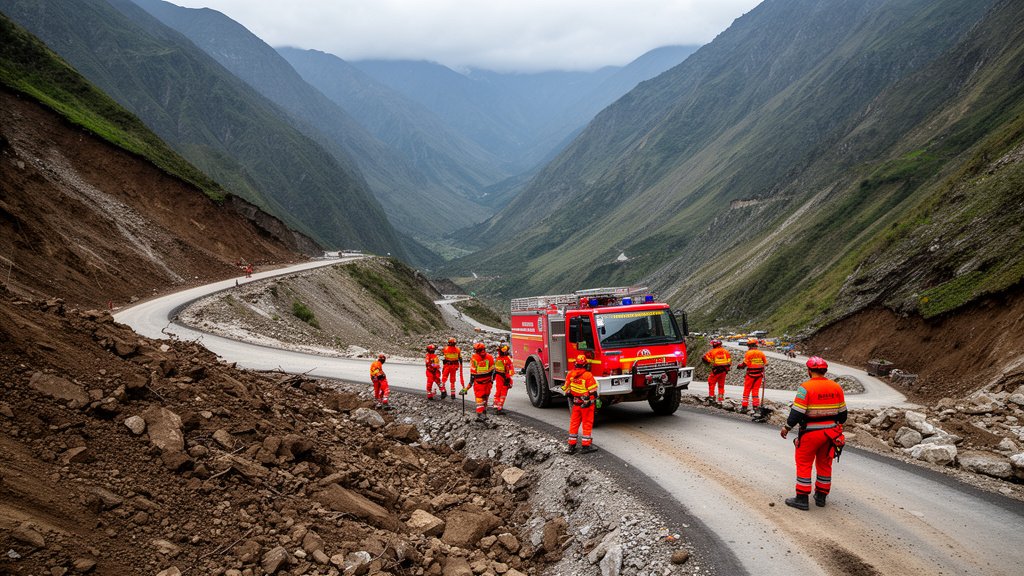
The death toll from the 7.4 magnitude earthquake in western Colombia has risen to 265, as rescue operations intensify in a desperate search for hundreds still missing beneath the rubble. Emergency response teams, bolstered by international aid, are working against the critical 72-hour window where survival probability drops significantly. Government officials have declared a state of emergency as the nation grapples with one of the most severe seismic events in recent history.
Key Highlights
- Confirmed Casualties: The death toll now stands at 265, with authorities warning this number will likely rise as debris clearing continues.
- Search and Rescue Operations: The National Unit for Disaster Risk Management (UNGRD) has deployed heavy machinery and canine units to navigate the rugged Andean topography.
- Geological Impact: The 7.4 magnitude tremor, caused by subduction along the Nazca Plate, has triggered secondary landslides, hampering aid access.
- Humanitarian Crisis: Field hospitals have been established to treat survivors, though medical supplies are being stretched thin due to damaged road networks.
A Nation in Mourning: The Response to the 7.4 Magnitude Disaster
The 7.4 magnitude earthquake that struck western Colombia has left a trail of devastation that is only now being fully quantified. As dawn broke over the affected regions, the true scope of the tragedy became visible: flattened homes, severed infrastructure, and thousands of displaced citizens huddled in temporary shelters. The death toll of 265 is a grim confirmation of the quake’s ferocity, but the number of missing persons remains the primary concern for the UNGRD and the Colombian Red Cross (Cruz Roja Colombiana).
The Logistical Nightmare in the Andes
Geography is proving to be the rescue teams’ greatest adversary. The affected region, characterized by steep valleys and narrow, winding roads, has been severely compromised by landslides triggered by the seismic shocks. Heavy rescue equipment—essential for moving reinforced concrete slabs and dense structural debris—has been delayed in reaching the hardest-hit rural municipalities.
“The terrain is fractured,” noted an official from the Ministry of Transport. “Roads that were once vital arteries are now blocked by earth and rock, forcing our teams to rely on helicopters and manual labor, which slows the pace of the rescue operations significantly.” The logistical challenges have forced a triage approach to aid, with medical supplies and search dogs being airlifted directly into the heart of the disaster zones.
Understanding the Seismic Trigger
Colombia sits in a region of high tectonic activity, largely defined by the interaction between the South American Plate and the Nazca Plate. The subduction process—where one plate slides beneath another—is a constant geologic reality here, but a 7.4 magnitude event represents a release of energy far exceeding typical tremors. Seismologists indicate that the focus of this earthquake was relatively shallow, which significantly increases the surface-level impact and the potential for structural collapse in buildings not engineered for high-intensity seismic loads.
Economic and Infrastructural Repercussions
Beyond the immediate loss of life, the economic impact is expected to be staggering. The region is primarily agricultural, and the destruction of processing facilities and storage warehouses threatens the local supply chain. Furthermore, the housing stock in many rural areas, often composed of older, unreinforced masonry, proved highly vulnerable to the shaking. The government has pledged to initiate a massive rebuilding program, but early assessments suggest that rebuilding critical infrastructure will take months, if not years, requiring significant national and international capital.
FAQ: People Also Ask
Q: What is the current status of the rescue operations?
A: Rescue operations are currently in a high-intensity phase. Teams from the UNGRD, the Colombian Red Cross, and international partners are focusing on the ‘golden window’—the first 72 hours—to locate survivors. Excavation is being prioritized in residential areas and community centers.
Q: How does this earthquake compare to historical events in Colombia?
A: While Colombia has experienced several major earthquakes, including the 1999 Armenia earthquake, this 7.4 magnitude event is significant for the specific intensity and the wide, rural distribution of the damage, which complicates the rescue response compared to urban-centered events.
Q: Are there risks of aftershocks?
A: Yes, seismologists monitoring the Nazca Plate subduction zone have warned that significant aftershocks are expected in the coming days and weeks. Residents are advised to avoid staying in damaged structures and to follow official guidance from local disaster authorities.
Q: How can international donors help?
A: Official channels for aid are currently being coordinated through the Colombian Ministry of Foreign Affairs and the UNGRD. Financial contributions to verified humanitarian organizations like the Red Cross are generally the most effective way to support, as they allow for the procurement of locally available resources.
More Stories
Costco Goes Nationwide on Uber Eats: A New Era for Bulk Delivery
Elena Rybakina Wins US Open, Ascends to World No. 1
Rubio Seals Security Pacts; Vance Drives Policy Agenda