











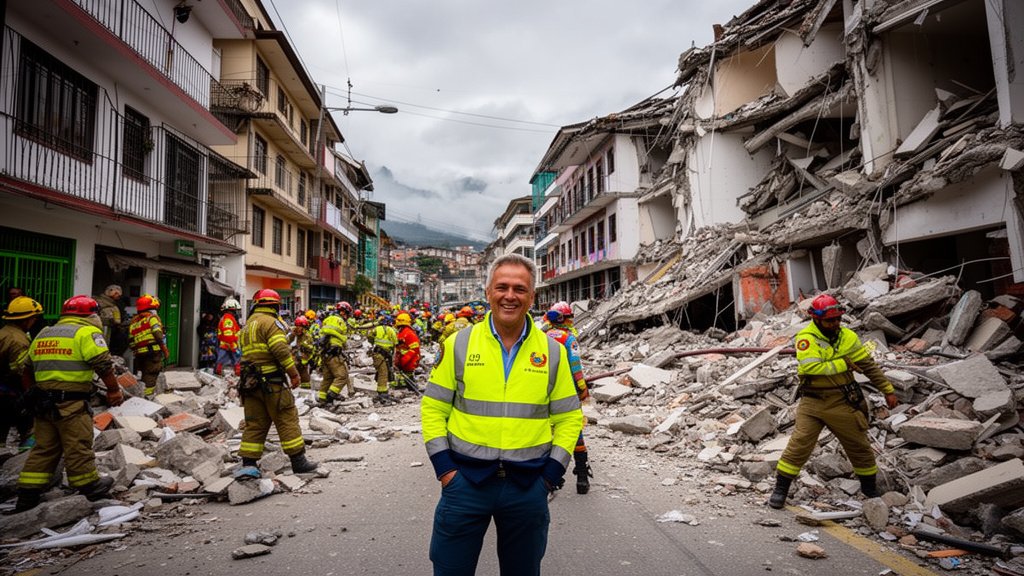
The death toll from the 7.4-magnitude earthquake that struck western Colombia has risen to 132, according to the latest reports from the National Unit for Disaster Risk Management (UNGRD). The seismic event, which has sent shockwaves through the nation’s interior, has triggered an urgent, large-scale humanitarian response, with rescue operations focused heavily on the city of Pereira and surrounding districts within the Risaralda department. Authorities warn that the toll may continue to rise as search teams navigate unstable rubble and mountainous terrain to reach isolated communities.
Key Highlights
- Fatalities: 132 confirmed deaths, with UNGRD search operations actively combing through debris.
- Intensity: The 7.4-magnitude quake struck western Colombia, causing widespread structural failure.
- Primary Location: The city of Pereira and the broader Coffee Axis are the primary focus of search and rescue teams.
- Response: Government disaster agencies are coordinating with international aid groups to manage medical emergencies and logistics.
- Status: Continuous rescue operations are ongoing, with warnings of potential aftershocks complicating recovery efforts.
The Anatomy of a National Tragedy: Understanding the 7.4 Magnitude Impact
The catastrophic event, which originated in the seismic-sensitive zone of the Andes, has paralyzed major infrastructure across western Colombia. The Servicio Geológico Colombiano (SGC) reported the epicenter occurred at a depth that allowed the tremor to be felt across multiple departments. For the city of Pereira, an economic hub of the Risaralda department, the destruction of critical residential and commercial infrastructure has been severe. The 7.4 magnitude classification places this earthquake among the most significant seismic events in the region in recent history, challenging the structural integrity of buildings that were not designed to withstand such massive vertical and horizontal acceleration.
Crisis Management and the Role of UNGRD
The National Unit for Disaster Risk Management (UNGRD) has mobilized its full tactical capacity to manage the crisis. Rescue teams, including specialized K-9 units and structural engineers, are working against the clock to stabilize buildings before attempting to extract survivors. Coordination has been the primary hurdle; the mountainous terrain typical of the Coffee Axis (Eje Cafetero) has created logistical bottlenecks for heavy machinery and ambulances. The government has prioritized medical triage stations in the hardest-hit sectors of Pereira, where temporary field hospitals are now operating at capacity.
The Economic Impact on the Coffee Axis
Beyond the human cost, the earthquake has struck at the heart of Colombia’s primary economic engine: the Coffee Axis. This region is vital not only for agricultural exports but also for domestic commerce. The destruction of local infrastructure—including warehouses, transportation routes, and drying facilities—is expected to have a long-term ripple effect on the local economy. Experts suggest that the disruption to the supply chain will require a significant federal intervention to stabilize the livelihoods of thousands of farmers and local merchants who have already suffered from the immediate loss of property and inventory.
Geological Context: Why Western Colombia?
Western Colombia sits atop one of the most complex tectonic regions on the planet, where the South American Plate interacts with the Nazca Plate. The subduction of these tectonic plates is responsible for the rise of the Andes mountains, but it also creates a perpetual, high-risk seismic environment. While building codes in cities like Pereira have been updated over the last two decades following past disasters, the sheer force of a 7.4 magnitude event tests the limits of modern seismic engineering. This event highlights the critical need for continued investment in retrofitting older structures and expanding early-warning sensor networks throughout the Andean range.
Logistical Challenges and Humanitarian Needs
The rescue operations face extreme adversity. In addition to the risk of structural collapse, secondary hazards like landslides are a constant threat in the Risaralda region. Heavy rains, often common in the area, threaten to saturate loose soil, which could lead to further road closures and isolation of villages. Humanitarian aid, including potable water, blankets, and temporary housing supplies, is currently being routed to primary distribution hubs, but the UNGRD has noted that reaching the most peripheral rural areas remains a significant priority for the next 72 hours.
FAQ: People Also Ask
Q: What is the current official death toll following the Colombia earthquake?
A: As of the most recent reports from the UNGRD, the confirmed death toll has reached 132. Rescue operations are continuing, and officials have cautioned that this number may change as search efforts progress through affected zones.
Q: Which regions of Colombia are most affected by the 7.4 magnitude tremor?
A: The primary focus of the emergency response is in the Risaralda department, specifically the city of Pereira, which has sustained significant structural damage. Surrounding areas within the broader Coffee Axis are also experiencing impact and logistical challenges.
Q: What are the main obstacles facing rescue teams right now?
A: The primary obstacles include the mountainous terrain of the Andean region, which complicates the transport of heavy machinery, the risk of secondary landslides, potential aftershocks, and the difficulty of navigating severely damaged multi-story buildings in urban sectors.
Q: How can residents and the international community support relief efforts?
A: The UNGRD advises that residents should follow official communication channels for updates on evacuation and relief. The international community typically coordinates through the Colombian Ministry of Foreign Affairs for official aid channels, while local relief relies on organized blood donations and volunteer logistics coordinated by government-approved NGOs.
More Stories
Costco Goes Nationwide on Uber Eats: A New Era for Bulk Delivery
Elena Rybakina Wins US Open, Ascends to World No. 1
Rubio Seals Security Pacts; Vance Drives Policy Agenda