











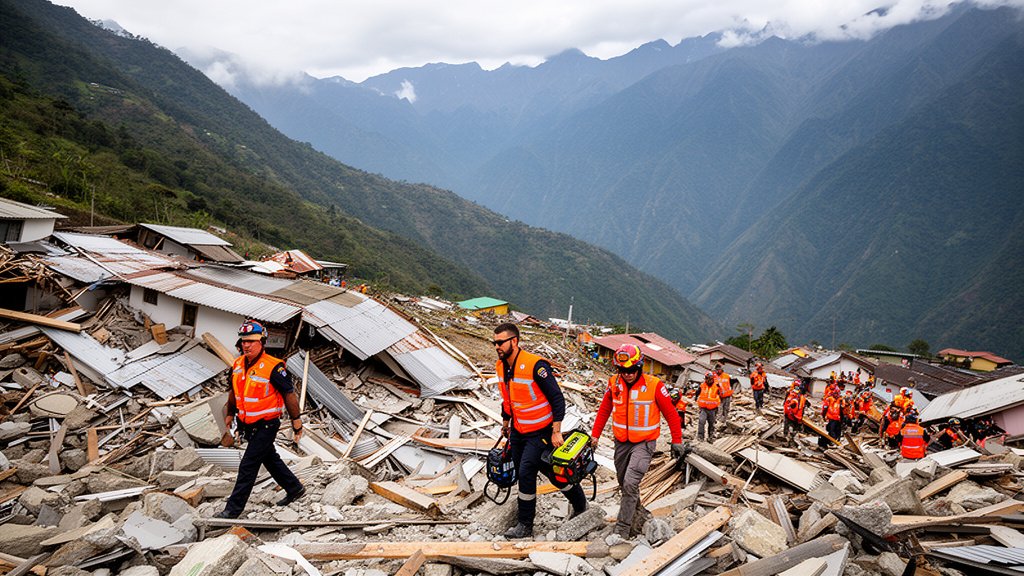
A powerful 7.4 magnitude earthquake struck western Colombia earlier today, leaving a trail of devastation that has claimed at least 111 confirmed lives. The tremor, which rippled through the mountainous region, triggered widespread panic, collapsed residential buildings, and severely damaged critical infrastructure, marking one of the most significant seismic events in the nation’s recent history. Emergency responders and local authorities are currently engaged in a frantic search-and-rescue operation as the death toll is feared to rise.
Key Highlights
- Immediate Toll: At least 111 confirmed fatalities with dozens of injuries reported across multiple municipalities.
- Seismic Force: The 7.4 magnitude quake originated in western Colombia, with the Servicio Geológico Colombiano (SGC) monitoring continued aftershocks.
- Humanitarian Response: The UNGRD (National Unit for Disaster Risk Management) has mobilized specialized teams to manage search and rescue alongside the Colombian Red Cross.
- Infrastructure Crisis: Significant damage to primary access roads and communication grids is complicating the delivery of medical supplies and equipment to remote, hard-hit areas.
The Aftermath: Assessing the Andean Catastrophe
The seismic event has plunged western Colombia into a state of emergency, testing the resilience of the nation’s infrastructure and the speed of its disaster response mechanisms. As the initial dust settles, the magnitude of the destruction has become painfully apparent. The 7.4 intensity, while common in subduction zones like those off the South American coast, hit inland with enough force to compromise structures that were not built to withstand such extreme lateral acceleration.
Seismic Origins and Regional Vulnerability
The Servicio Geológico Colombiano (SGC) has confirmed that the epicenter was situated in a geologically volatile zone of western Colombia. The region sits atop complex fault lines where the Nazca and South American tectonic plates interact. This particular event serves as a stark reminder of the “Ring of Fire” dynamics that characterize the Pacific coast of South America. Experts note that the shallow depth of the hypocenter likely contributed to the intensity of the ground shaking experienced in nearby urban centers and rural valleys. The SGC continues to issue warnings regarding aftershocks, which are common following an event of this magnitude and pose a secondary risk to already compromised structures. Geologists are currently analyzing seismic data to determine if the rupture occurred on a previously mapped fault or if it represents an unrecorded localized shear, which could change current hazard assessments for the region.
The Logistics of Humanitarian Response
In the immediate wake of the quake, the National Unit for Disaster Risk Management (UNGRD) activated a national crisis protocol, coordinating with regional departments to deploy search-and-rescue squads. The challenge, however, is immense. Western Colombia is defined by its rugged, mountainous terrain, where deep valleys and steep ridges isolate communities. The collapse of key bridges and the blockage of arterial highways due to landslides have effectively severed these communities from the regional capital, forcing the government to rely heavily on aerial support—specifically helicopters—to transport heavy machinery, medical units, and canine search teams. The Colombian Red Cross has set up makeshift triage centers in the hardest-hit zones, prioritizing the stabilization of critically injured victims. The integration of local municipal resources with national assets is the current priority, though communication blackouts in remote areas continue to hamper the central command’s ability to allocate resources with surgical precision. Volunteer civilian groups have also emerged as first responders, digging through rubble with bare hands in an attempt to reach trapped survivors before the window of survivability closes.
Long-Term Resilience and Structural Challenges
Beyond the immediate search and rescue phase, this tragedy forces a difficult conversation regarding building codes and infrastructure resilience in high-risk zones. Many of the collapsed structures were older residential units, reflecting a broader issue of socioeconomic inequality where vulnerable populations reside in dwellings lacking adequate seismic reinforcement. The economic impact is expected to be profound, not only in terms of emergency response costs but also in the long-term reconstruction of local industries and agricultural logistics hubs that have been flattened. Future policy discussions will likely focus on the mandatory retrofitting of older infrastructure and the integration of advanced early-warning systems that can provide crucial seconds of notice to urban populations. Furthermore, the event underscores the importance of climate-resilient infrastructure; the combination of seismic activity and the region’s propensity for heavy rainfall creates a compounding risk, where earthquakes trigger landslides that can bury villages long after the ground stops shaking. International aid organizations and developmental banks are expected to pledge support, but the success of the recovery will depend on the government’s ability to streamline the bureaucratic processes required for rapid, large-scale reconstruction in a volatile geographical environment. The path to recovery will be measured not just in rubble cleared, but in the structural evolution of Colombian towns to face the inevitable recurrence of seismic activity.
FAQ: People Also Ask
1. Is the death toll expected to rise in the coming days?
Yes. Authorities have indicated that the current figure of 111 fatalities is likely to increase. Rescue teams are currently accessing remote regions that were previously cut off due to infrastructure damage, and there are multiple reports of missing persons under collapsed structures.
2. What is the role of the UNGRD in this emergency?
The National Unit for Disaster Risk Management (UNGRD) acts as the central coordinating body for the disaster. They are responsible for mobilizing national search and rescue assets, distributing emergency aid (food, water, medical supplies), and coordinating with local governments to ensure a unified response to the crisis.
3. Are further aftershocks a risk to the population?
According to the Servicio Geológico Colombiano (SGC), aftershocks are a standard and expected consequence of a 7.4 magnitude earthquake. Residents in the affected area are advised to remain vigilant, as these tremors can cause further structural failure in buildings already weakened by the primary event.
4. Why was the damage so extensive in western Colombia?
The damage is attributed to a combination of the earthquake’s shallow hypocenter, the high magnitude, and the region’s complex, mountainous geography. Many structures in rural and semi-rural areas were not engineered to modern seismic resistance standards, leading to significant structural collapse.
More Stories
Costco Goes Nationwide on Uber Eats: A New Era for Bulk Delivery
Elena Rybakina Wins US Open, Ascends to World No. 1
Rubio Seals Security Pacts; Vance Drives Policy Agenda