











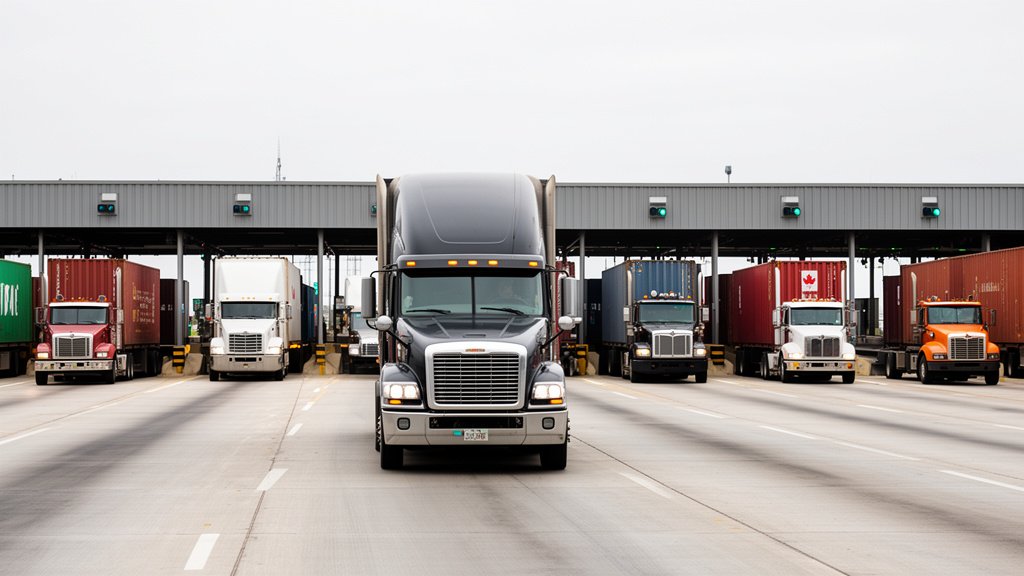
The Canadian government has officially implemented a series of retaliatory tariffs targeting a range of United States goods, a strategic move that signifies a major escalation in the deteriorating trade and diplomatic relations between the two neighbors. Following a period of increasing friction regarding trade enforcement and regulatory compliance, Ottawa’s decision marks a departure from its traditional policy of consensus-based dispute resolution, opting instead for a tit-for-tat approach that threatens to disrupt the integrated North American supply chain. This development comes amid broader geopolitical instability, forcing stakeholders across the continent to brace for potential market volatility and increased costs for consumers and businesses alike.
Key Highlights
- Retaliatory Mechanism: Canada’s new tariff regime is calibrated to directly counter recent U.S. trade actions, specifically impacting a selection of manufactured goods and agricultural products.
- Supply Chain Disruption: Analysts warn that the integrated nature of the North American manufacturing sector, particularly in the automotive and aerospace industries, leaves both nations vulnerable to significant production delays.
- Diplomatic Fallout: The move represents a rare public display of discord between the two nations, which have historically operated under the United States–Mexico–Canada Agreement (USMCA) framework for dispute resolution.
- Economic Impact: Businesses are currently assessing the immediate financial burden, with experts predicting potential price hikes for imported components and finished goods in both the Canadian and U.S. markets.
The Erosion of North American Trade Harmony
The implementation of these tariffs by Ottawa represents a tectonic shift in the Canada-U.S. economic relationship. For decades, the border between these two nations has been defined by seamless commerce and a shared regulatory environment that facilitated the world’s largest integrated supply chain. However, the recent decision to impose retaliatory duties signals that the era of unquestioned trade cooperation has entered a phase of significant uncertainty.
The Catalyst of Conflict
The primary driver of this escalation appears to be a fundamental breakdown in negotiations regarding enforcement mechanisms within the USMCA framework. While both parties have long navigated disagreements through established arbitration channels, the recent shift in the U.S. political stance toward protectionist trade policies has left Canada feeling marginalized. By initiating these tariffs, Ottawa is attempting to signal to Washington that unilateral actions will be met with concrete resistance. This is not merely a dispute over specific commodity pricing; it is a battle over the autonomy of Canadian trade policy in the face of increasingly aggressive American economic mandates. The Office of the United States Trade Representative (USTR) has historically favored bilateral pressure, but this new resistance from the North suggests that Canada is no longer willing to absorb trade policy shifts without seeking a reciprocal financial toll.
Sector-Specific Economic Shockwaves
The sectors most acutely affected by these tariffs are those with the highest degree of cross-border integration. The North American automotive industry, which relies on the seamless movement of parts across the border multiple times before a vehicle is assembled, faces the most immediate threat. If manufacturers in Canada must pay higher costs for U.S.-made electrical components or raw steel, these costs will inevitably be passed down to the consumer. Furthermore, the agricultural sector, specifically dairy and grain exporters, finds itself on the front lines of this trade war. These businesses operate on tight margins, and the sudden imposition of tariffs creates a liquidity crisis that could force small-to-mid-sized enterprises to halt operations entirely until the dispute is resolved. Global Affairs Canada has emphasized that these measures are ‘proportional and targeted,’ yet the market reaction suggests that the complexity of modern logistics will likely cause collateral damage across unrelated sectors that rely on third-party U.S. suppliers.
The USMCA Under Duress
The USMCA was intended to stabilize the relationship and provide a predictable roadmap for trade. Instead, this current friction has exposed the inherent weaknesses in the agreement’s enforcement clauses. When one party chooses to ignore the spirit of the deal in favor of domestic political posturing, the entire framework becomes vulnerable. Critics of the current trade environment argue that the WTO (World Trade Organization) has become too toothless to intervene effectively in disputes between such powerful economic entities. As a result, the situation has devolved into a power play where economic leverage is the primary currency. This ‘might-makes-right’ approach is concerning for multinational corporations that have invested billions into Canadian infrastructure based on the assumption of long-term stable access to U.S. markets. If this tariff regime remains in place for an extended period, it may force a permanent restructuring of North American supply chains, potentially moving some manufacturing operations back to domestic soil or shifting them to other trade partners, which would ironically undermine the ‘friend-shoring’ goals championed by current political administrations.
Long-Term Geopolitical Repercussions
Beyond the balance sheets, there is a profound concern regarding the long-term diplomatic impact. The U.S. and Canada share one of the world’s longest undefended borders, and their defense and intelligence cooperation is deeply intertwined with their economic relationship. By allowing trade relations to sour, political leaders are risking the ‘spillover effect,’ where economic animosity begins to poison cooperation in other critical areas, such as energy security, climate policy, and Arctic defense. Analysts suggest that the only path back to stability is a comprehensive renegotiation of trade enforcement protocols—a process that is politically difficult for both administrations given the rising tide of economic nationalism within their respective electorates. Until such a diplomatic breakthrough occurs, the North American trade landscape will remain in a state of high alert, characterized by fluctuating costs and heightened geopolitical sensitivity.
FAQ: People Also Ask
Q: How do these tariffs impact the average Canadian and American consumer?
A: In the short term, consumers on both sides of the border may face inflationary pressures. As businesses pass on the costs of tariffs to maintain their margins, goods ranging from electronics and automobiles to groceries may see price increases. The extent of this impact depends on the duration of the tariffs and how quickly supply chains can be diverted to non-tariffed sources.
Q: Is this the end of the USMCA trade deal?
A: While this escalation is a significant strain on the USMCA, it is not an immediate termination of the agreement. The framework remains the legal basis for trade, but its effectiveness is currently severely compromised. Both nations are essentially testing the limits of the deal’s flexibility, pushing the boundaries of what is permitted before a total collapse occurs.
Q: What is the likelihood of a quick resolution to this trade dispute?
A: A swift resolution is unlikely given the political climate in both countries. Both administrations are currently navigating complex domestic issues where appearing ‘tough on trade’ is a politically popular stance. Diplomatic resolutions typically require significant compromise, which, at this stage, neither government appears willing to offer until the economic pain of the tariffs begins to outweigh the political benefits of maintaining the trade dispute.
More Stories
Costco Goes Nationwide on Uber Eats: A New Era for Bulk Delivery
Elena Rybakina Wins US Open, Ascends to World No. 1
Rubio Seals Security Pacts; Vance Drives Policy Agenda