

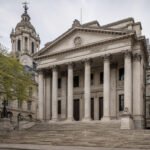






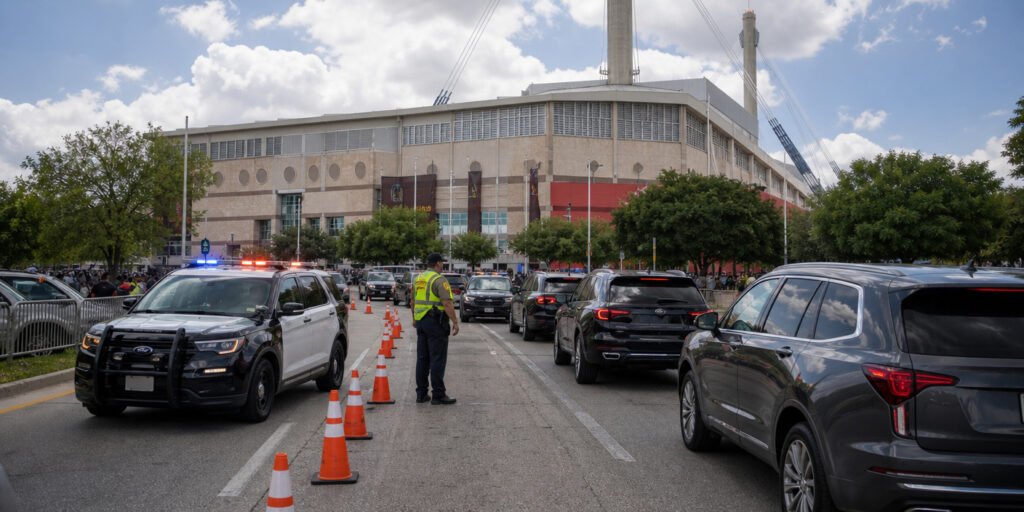
Today, the Freeman Coliseum in San Antonio, Texas, hosts a mid-term rally featuring President Donald Trump. As thousands of supporters and attendees descend upon the area, local authorities, including the San Antonio Police Department (SAPD) and regional traffic management agencies, have issued urgent warnings regarding significant traffic congestion and unpredictable road closures. Residents and commuters are advised to exercise extreme caution, anticipate extensive delays, and, if possible, avoid the area entirely to ensure the safety of both the public and responding security personnel.
Key Highlights
- Traffic Congestion: Heavy traffic is expected along the I-10 and I-35 corridors leading to the Freeman Coliseum, with spillover congestion likely impacting arterial roads in the vicinity.
- Road Closures: Law enforcement has authorized temporary, intermittent, and potentially long-term road closures surrounding the venue for the duration of the event.
- Official Guidance: The San Antonio Police Department advises residents to steer clear of the Freeman Coliseum area to minimize gridlock and allow emergency services clear access.
- Unpredictable Timing: Commuters are warned that traffic patterns will shift rapidly based on the President’s arrival, departure, and the density of the arriving crowds.
Navigating the Congestion: Managing the San Antonio Commute
The arrival of a presidential motorcade and the subsequent gathering of a high-capacity crowd at the Freeman Coliseum represent a major logistical challenge for San Antonio’s infrastructure. When such a high-profile event occurs, the standard urban flow is disrupted, replaced by a rigid security perimeter designed to protect the President and maintain order. For the average San Antonio commuter, this means that the typical afternoon or evening transit will likely be characterized by significant delays, detours, and altered traffic signal timings.
The Anatomy of a Security Perimeter
At the heart of the disruption is the creation of a ‘security bubble.’ This entails more than just a few traffic cones; it involves a sophisticated coordination between the United States Secret Service, the San Antonio Police Department, and local Texas Department of Transportation (TxDOT) officials. These agencies work in tandem to secure the Freeman Coliseum, effectively cordoning off key access points to prevent unauthorized vehicle access.
Commuters should be aware that these closures are rarely static. As the President’s motorcade approaches, law enforcement may implement ‘rolling closures’ on highways and major surface streets. This means that even if a road appears open at 3:00 PM, it could be suddenly restricted at 3:15 PM. The unpredictability of these closures is the primary cause of frustration for motorists, as navigation apps like Waze or Google Maps may not immediately reflect the real-time changes enforced by on-ground officers.
Historical Context: Campaign Rallies and Urban Mobility
Political rallies have historically been catalysts for significant urban disruption. Whether in San Antonio or other major metropolitan hubs, the concentration of thousands of vehicles in a single confined area creates an inevitable strain on local infrastructure. While the Freeman Coliseum is equipped to handle large-scale events such as the San Antonio Stock Show & Rodeo, a presidential rally introduces a different set of variables.
Unlike a concert or a sporting event, where crowds arrive and disperse in predictable waves, a political rally is often fluid. The intensity of public interest, the accompanying media presence, and the necessity for robust security checks mean that the ‘traffic footprint’ of a political rally is often much larger than other similarly sized gatherings. Lessons from previous rallies in Texas indicate that the ripple effect of these events often extends several miles beyond the immediate venue perimeter, effectively creating a ‘bottleneck zone’ that can persist for several hours after the event concludes.
Emergency Management and Public Safety
Beyond the inconvenience to commuters, the primary concern for the city of San Antonio is the maintenance of emergency services. During high-traffic events, the risk is not just the delay in getting to work or home; it is the potential delay for ambulances, fire trucks, and police units responding to unrelated emergencies in the vicinity of the Freeman Coliseum.
This is precisely why authorities are so adamant about residents avoiding the area. When the roads are clogged with attendees, the ability for emergency vehicles to navigate to a medical emergency is severely compromised. By choosing alternative routes, citizens are not only saving themselves time but are actively contributing to the overall public safety of the city. Authorities have confirmed that additional units have been deployed to monitor traffic flows and assist in rerouting vehicles, but these measures can only do so much in the face of mass congestion.
Strategic Planning for Residents
For those living or working near the Freeman Coliseum, the advice is straightforward: plan ahead. This includes:
- Remote Work/Flex Hours: If possible, consider working from home or adjusting your arrival/departure time to avoid the peak rally window.
- Alternative Routes: Research routes that bypass the I-10/I-35 interchange and avoid roads directly adjacent to the Freeman Coliseum.
- Stay Informed: Monitor local news channels, radio traffic reports, and the official social media channels of the San Antonio Police Department for the most accurate, real-time updates on closures.
- Patience: If you find yourself caught in the traffic, remember that frustration will not move the cars faster. Remain calm, keep your vehicle clear of intersections, and follow all instructions from traffic control officers.
As San Antonio prepares for the influx of visitors, the priority remains balancing the right to assembly with the functional needs of the city’s infrastructure. By staying informed and planning for delays, the local community can minimize the impact of this high-profile event on their daily lives.
FAQ: People Also Ask
Q: How long will the road closures last around the Freeman Coliseum?
A: There is no fixed end time, as closures are dependent on the President’s schedule, crowd dispersal, and the security clearance process. Commuters should expect heavy traffic and intermittent closures for several hours before and after the event.
Q: Which roads should I avoid during the rally?
A: Authorities specifically advise avoiding the immediate vicinity of the Freeman Coliseum. Major highways including segments of I-10 and I-35 may experience rolling closures, so it is best to plan routes that avoid these corridors entirely if possible.
Q: Will public transportation be affected?
A: Yes, local bus routes and public transit services operating near the Freeman Coliseum are highly likely to be delayed, rerouted, or suspended due to the congestion and security closures. Check with the local transit authority for service alerts.
Q: Are there parking restrictions in place?
A: Extensive parking restrictions are typically enforced in and around the venue to accommodate security vehicles and authorized personnel. Street parking in residential areas near the venue may also be prohibited.
More Stories
Global Election Tensions: Legal Battles in CA, High Stakes in Brazil
US Envoy Witkoff Labels Putin ‘Humanitarian’ in Peace Push
Toledo Hazmat Crisis: Mass Evacuations Ordered for North Side