











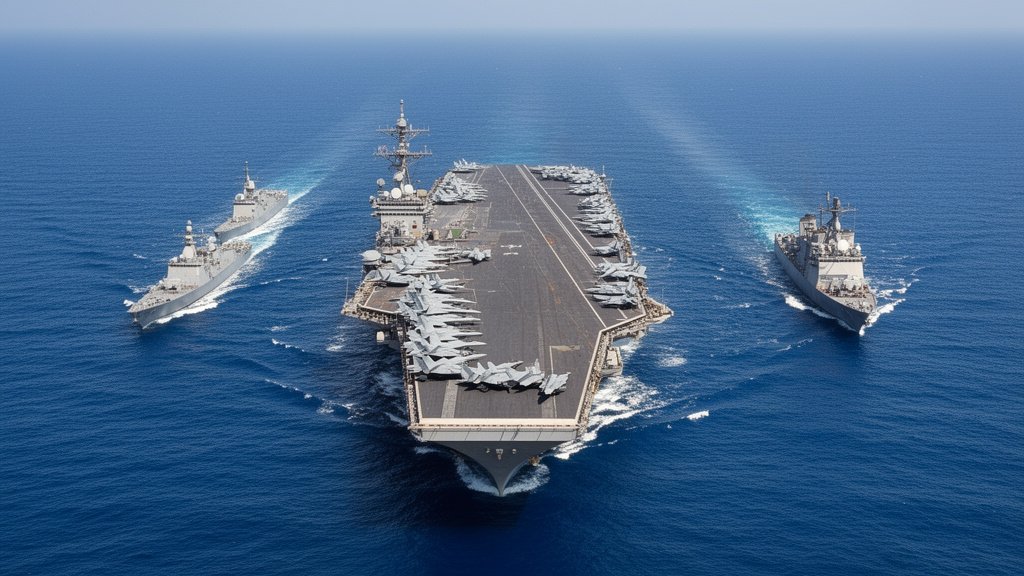
The Pentagon is aggressively expanding its maritime posture in the Middle East, initiating the deployment of a third aircraft carrier strike group alongside a surge of approximately 9,000 to 10,000 additional troops. This significant mobilization comes as regional volatility involving Iran and its proxy networks intensifies, signaling a strategic pivot by the Department of Defense to bolster deterrence and project overwhelming force in a volatile geopolitical theater. By concentrating such massive naval and personnel assets, the United States is not merely responding to current threats but is actively attempting to reshape the regional security architecture, aiming to dissuade adversaries from further escalation.
Projecting Strength: The Strategic Logic of a Triple-Carrier Surge
Assessing the Operational Necessity
The deployment of a third carrier strike group (CSG) represents a substantial escalation in US regional capabilities. Historically, the presence of one carrier in the CENTCOM area of responsibility is viewed as a standard baseline. Doubling, and now potentially tripling that presence, shifts the operational paradigm from routine monitoring to a high-readiness posture capable of sustained, multi-domain conflict. These strike groups are not merely ships; they are mobile, self-contained airbases, each capable of projecting power across thousands of miles.
From a logistics standpoint, maintaining three CSGs requires a complex, synchronized logistical tail. This includes continuous refueling, replenishment of munitions, and the rotation of support vessels. The 9,000 to 10,000 additional troops identified in reports are not solely infantry; they comprise critical personnel for air defense, intelligence, surveillance, and reconnaissance (ISR) operations, as well as logistical experts required to sustain such a footprint. The integration of this force allows the US to maintain a persistent watch over the Strait of Hormuz, the Bab el-Mandeb, and the broader Levant, ensuring that no single hot-spot event can degrade the overall US military posture.
The Iran Factor: Deterrence Through Presence
At the heart of this deployment is the ongoing friction with the Islamic Republic of Iran and its affiliated networks. The strategy of ‘deterrence by presence’ relies on the visibility of US hardware to discourage Iranian military planners from executing aggressive maneuvers—whether that be direct missile strikes, harassment of commercial shipping, or proxy attacks against US installations. By surging three CSGs, Washington is signaling to Tehran that the threshold for acceptable provocation has been significantly lowered. The objective is to make the cost-benefit analysis of an attack on US or partner assets prohibitively expensive for Iranian leadership.
This is a delicate balancing act. While the Pentagon aims to project stability, such a massive buildup carries the inherent risk of the ‘security dilemma,’ where defensive posturing is interpreted as offensive intent. The presence of additional Marine Corps assets alongside the carrier groups provides the US with rapid-response capabilities, including amphibious assault and localized force protection, which are essential if the situation deteriorates into kinetic conflict. The US military is effectively betting that the size and sophistication of this force are sufficient to compel restraint without triggering the very conflict it seeks to prevent.
Protecting Global Arteries and Maritime Stability
Beyond the direct confrontation with Iran, the deployment serves the broader objective of protecting maritime chokepoints. A substantial portion of the world’s energy supply flows through the narrow waterways surrounding the Arabian Peninsula. Disruption to these routes—whether through Iranian naval mining, drone swarms, or asymmetric maritime tactics—would have immediate, destabilizing effects on the global economy. By positioning three CSGs, the US creates a ‘bubble’ of security that extends protection to commercial vessels, effectively guaranteeing the free flow of goods and energy resources.
This naval concentration also serves as a security umbrella for regional allies. For countries bordering the Gulf and the Red Sea, the sight of multiple American carrier groups provides a necessary confidence boost, reinforcing defense agreements and encouraging continued cooperation in intelligence sharing and counter-terrorism. It is a tangible, visual affirmation of the US security guarantee, which has been under scrutiny amid shifting global priorities. The presence of these vessels is designed to show that, despite Washington’s interest in ‘pivot to Asia’ strategies, the Middle East remains a central pillar of its national security interests.
Future Implications and Operational Endurance
Looking forward, the long-term sustainability of this three-carrier presence remains a question of resources. Operating three strike groups at this level of intensity places significant stress on the US Navy’s fleet readiness. Maintenance cycles, crew burnout, and the wear and tear on Nimitz-class and Gerald R. Ford-class vessels are real constraints. This deployment is likely to be viewed as a temporary surge rather than a permanent fixture, designed to address a specific window of high-threat activity. The Pentagon will monitor regional developments closely, using the data gathered during this surge to inform future basing decisions and the potential for rotating forces to maintain coverage without exhausting the fleet.
Ultimately, this deployment underscores the enduring reality that naval power remains the most effective tool in the US diplomatic arsenal. As the region navigates a period of profound uncertainty, the deployment of this third strike group functions as a forceful exclamation point, reminding all regional actors of the underlying military realities that govern the Middle East.
More Stories
Global Election Tensions: Legal Battles in CA, High Stakes in Brazil
US Envoy Witkoff Labels Putin ‘Humanitarian’ in Peace Push
Toledo Hazmat Crisis: Mass Evacuations Ordered for North Side