











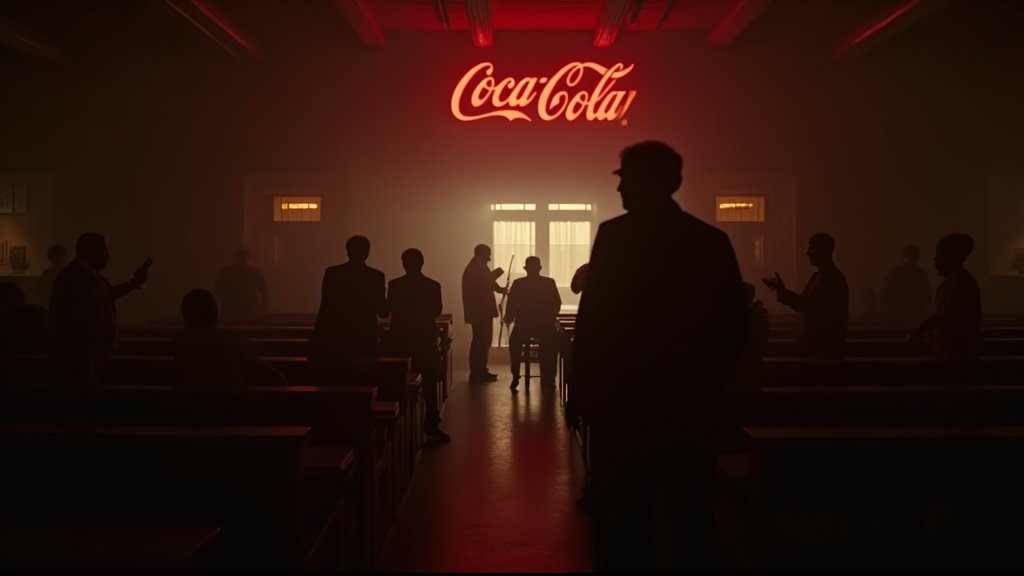
A recent surge in online sharing has brought a 1976 Coca-Cola commercial back into the spotlight, with many viewers interpreting it as a powerful symbol of a bygone era of American patriotism. The ad, originally aired during the nation’s Bicentennial celebration, features scenes of everyday Americans engaging in patriotic activities, set against a backdrop of national pride.
Key Highlights:
- A 1976 Coca-Cola commercial has gone viral, sparking discussion about patriotism.
- The ad, released during the U.S. Bicentennial, depicts scenes of American life and national pride.
- Online reactions vary, with some seeing it as a genuine reflection of past patriotism and others as a nostalgic idealization.
- The renewed attention highlights evolving perceptions of national identity and advertising’s role in shaping them.
A Nostalgic Glimpse: The 1976 Coca-Cola Bicentennial Ad
The enduring power of advertising to capture and reflect the cultural zeitgeist was recently underscored by the viral resurgence of a 1976 Coca-Cola commercial. Titled “America the Beautiful,” the advertisement, which aired during the United States’ Bicentennial year, has become a focal point for conversations about patriotism, national identity, and the perceived differences between past and present American culture. The commercial juxtaposes imagery of everyday American life—families picnicking, children playing, workers on the job—with iconic American landmarks and symbols, all set to a stirring rendition of “America the Beautiful.”
The Bicentennial Context
Released in 1976, the ad was intrinsically tied to the nation’s 200th birthday. This was a period when America was grappling with its identity following the Vietnam War and Watergate. Coca-Cola, a quintessential American brand, aimed to tap into a sense of unity and national pride. The commercial’s timing and its earnest portrayal of American life resonated deeply, becoming a memorable piece of advertising history. The focus on shared experiences and common values was a deliberate strategy by Coca-Cola to align its brand with a positive and unifying national narrative.
Modern Interpretations and Debates
In the digital age, the ad has found a new audience, prompting a wave of online commentary. Many viewers express a profound sense of nostalgia, viewing the commercial as an authentic representation of a more overtly patriotic and perhaps simpler time. They often contrast the ad’s themes with contemporary American society, suggesting a decline in national unity and pride. This perspective often romanticizes the past, filtering it through a lens of present-day concerns. Coca-Cola’s historical marketing efforts are often cited as examples of how brands can become intertwined with national identity.
However, not all interpretations are uniformly positive. Some critics and historians point out that the ad, like all advertising, was a carefully crafted piece of marketing designed to evoke specific emotions and associate the brand with positive national sentiment. They argue that while the ad may reflect a certain public mood of the time, it also represents an idealized vision, omitting the complexities and divisions present in America even in 1976. This viewpoint encourages a more critical examination of nostalgic narratives and the ways in which they are constructed.
Advertising’s Evolving Role
The renewed interest in the 1976 Coca-Cola ad also highlights the evolving role of advertising in society. From overt appeals to patriotism to more nuanced, data-driven campaigns, marketing strategies have transformed significantly. The Bicentennial ad stands as a testament to a bygone era of advertising, where broad, emotional appeals were often the primary tools. Understanding how brands like Coca-Cola have historically engaged with national themes provides insight into the symbiotic relationship between commerce, culture, and national identity. This phenomenon underscores the power of media to shape collective memory and public discourse, especially during significant national moments.
FAQ: People Also Ask
What was the theme of the 1976 Coca-Cola commercial?
The primary theme of the 1976 Coca-Cola commercial was patriotism and national unity, especially in the context of the U.S. Bicentennial celebration. It aimed to evoke feelings of pride in American life and heritage.
Why has the 1976 Coca-Cola ad gone viral recently?
The ad has resurfaced and gone viral due to its perceived representation of a past era of strong American patriotism. It has resonated with audiences online who feel a sense of nostalgia for that perceived sentiment.
Was the 1976 Coca-Cola ad controversial at the time?
While the ad was generally well-received for its patriotic themes during the Bicentennial, contemporary discussions often involve a more critical look at advertising’s role in shaping national narratives. There wasn’t widespread controversy at the time, but its message of unity was a response to the divisions of the era.
How has Coca-Cola’s advertising changed since 1976?
Coca-Cola’s advertising has evolved significantly, moving from broad, emotional appeals like the 1976 ad to more diverse and targeted campaigns that reflect contemporary social values, global reach, and a wider array of consumer segments. Their marketing now often incorporates digital strategies and a focus on inclusivity.
What does the resurgence of this ad say about current American culture?
The renewed interest in the 1976 ad suggests a current cultural longing for perceived unity and a simpler, more overtly patriotic time. It also sparks debate about how patriotism is understood and expressed in contemporary America, and how idealized versions of the past are remembered.
More Stories
Lowriding’s Rise: SF Celebrates Cruising Culture
U.S. Repatriates 64 Cultural Relics and Fossils to China
Betting on Viral Fame: Novig’s Strategic Use of Sydney Sweeney