











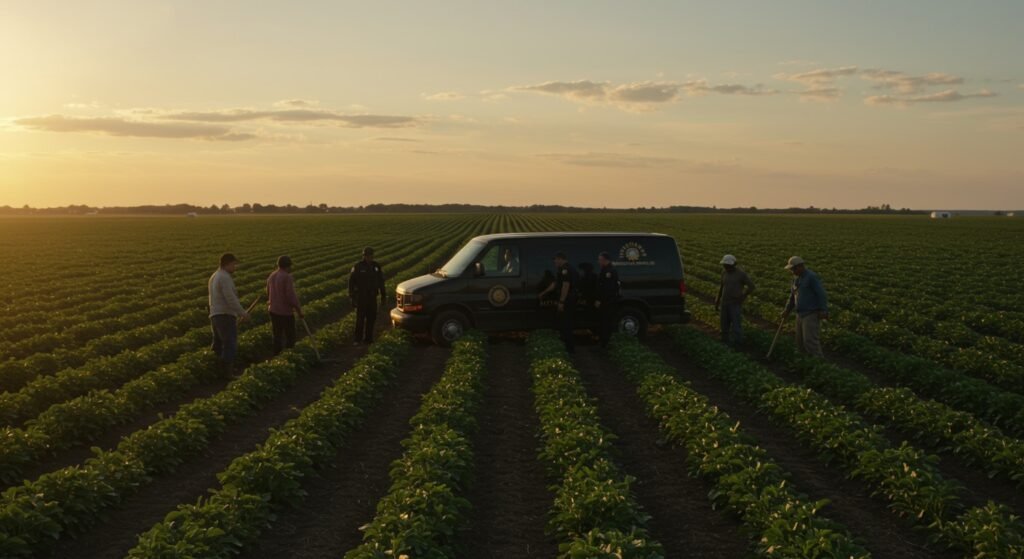
BATAVIA, NY – Advocates in western New York are intensifying their demands for the immediate release of labor leaders and members of the United Farm Workers (UFW) following a recent raid by U.S. Immigration and Customs Enforcement (ICE). The operation, which occurred on Friday, resulted in the detention of numerous individuals at Lynn-Ette & Sons Farms, raising concerns among civil rights and labor organizations.
At least 14 employees of Lynn-Ette & Sons Farms were arrested during the Friday raid. These individuals are currently being held at an ICE facility located in the city of Batavia. Reports indicate that ICE agents arrived at the farm reportedly armed with a list of names, suggesting a targeted operation. Detained workers were transported from the farm in unmarked vans.
Advocate Demands and Local Impact
The arrests have sparked outrage and immediate action from advocates and labor groups, including those affiliated with the UFW. They argue that the detention of these workers, who are integral to the agricultural economy of the region, disrupts lives and communities and violates fundamental rights. Local organizations are mobilizing support, calling for transparency regarding the detentions and demanding the swift release of all those apprehended. The facility in Batavia has become a focal point for protest and advocacy efforts.
Critics of the raid question the necessity and methodology employed by ICE agents, particularly the use of unmarked vehicles and the alleged reliance on a predetermined list, which some interpret as profiling or targeted enforcement that bypasses due process.
Broader Context: US Deportation Talks with African Nations
The raid in western New York unfolds against the backdrop of broader discussions by Trump administration officials regarding potential agreements with several African nations to accept immigrants deported from the United States. Sources indicate that talks are underway with countries including Rwanda, Angola, and Equatorial Guinea.
These diplomatic engagements aim to establish frameworks under which the U.S. could potentially send individuals, who have been ordered deported, to these African nations. The discussions represent a significant geographic expansion of the administration’s efforts to secure agreements for receiving deported migrants, moving beyond traditional arrangements with countries in the Western Hemisphere.
Precedent: Agreements with Latin American Countries
The current engagement with African countries mirrors previous efforts by the Trump administration to finalize similar agreements with nations in Latin America. These past arrangements have drawn considerable scrutiny and criticism.
One notable example is the agreement reached with El Salvador. Reports from March indicate that hundreds of Venezuelans, who had been deported from the United States, were reportedly sent to El Salvador and subsequently imprisoned there. This outcome has been cited by human rights organizations as a concerning precedent, raising questions about the welfare and safety of deportees under such agreements.
The potential agreements with Rwanda, Angola, and Equatorial Guinea suggest a continuation of this strategy, seeking to diversify the destinations for individuals deported from the United States. The nature and terms of these potential agreements, and the safeguards they might or might not include for the deported individuals, remain subjects of intense interest and concern among advocates and international observers.
Looking Ahead
The situation in western New York highlights the immediate human impact of immigration enforcement actions within the United States. Meanwhile, the ongoing diplomatic discussions with African nations signal a potential shift in global migration patterns and the strategies employed by the U.S. government in managing deportations. The demands from advocates in Batavia and the progress of talks with countries like Rwanda and Angola are expected to remain key areas of focus in the coming days, reflecting the complex and evolving landscape of U.S. immigration policy as of May 06, 2025.
More Stories
Lowriding’s Rise: SF Celebrates Cruising Culture
U.S. Repatriates 64 Cultural Relics and Fossils to China
Betting on Viral Fame: Novig’s Strategic Use of Sydney Sweeney