











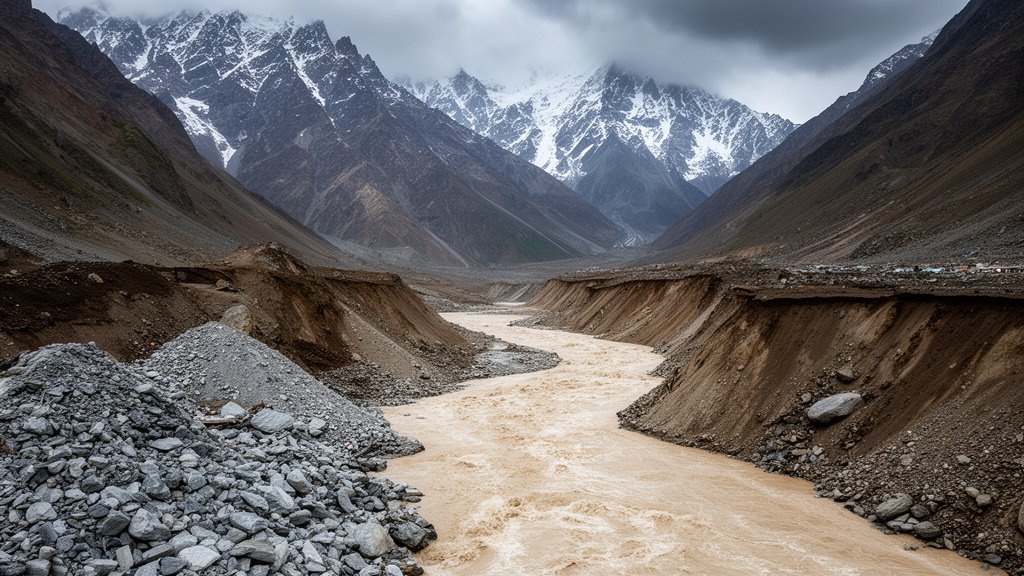
A devastating series of floods and landslides, primary among them a massive glacial failure, has claimed nearly 400 lives across Nepal and the Tibet Autonomous Region. The disaster, which has crippled infrastructure and displaced thousands, remains active as government meteorological agencies in both nations warn of imminent fresh flooding risks, urging residents to prepare for continued atmospheric volatility.
Key Highlights
- Death Toll Nears 400: Combined casualty figures across Nepal and Tibet have reached alarming levels, with hundreds confirmed dead and many still listed as missing or unreachable.
- Glacial Trigger: Experts point to a sudden glacier collapse as the primary catalyst for the flash floods, which swept downstream, overwhelming riverbanks and infrastructure.
- Cross-Border Warning: Both Nepal and Chinese authorities in the Tibet Autonomous Region have issued severe weather alerts, citing unstable soil conditions and potential for secondary glacial lake outburst floods (GLOFs).
The Anatomy of a Himalayan Catastrophe
The tragedy unfolding across the Himalayas is not merely a product of seasonal monsoon rains; it represents a more complex and lethal convergence of geological instability and climatic shifts. The triggering event—a sudden glacier collapse—sent torrents of water, debris, and ice rushing down river valleys with little warning. This phenomenon, known as a Glacial Lake Outburst Flood (GLOF), serves as a grim reminder of the region’s vulnerability to warming temperatures, which destabilize hanging glaciers at high altitudes.
The Mechanics of the Collapse
At the heart of this disaster is the accelerated melting and destabilization of permafrost and glacial structures. When a glacier section breaks away, it can breach natural moraine dams, sending millions of cubic meters of water downstream. This force is often magnified by the steep, narrow topography of the Himalayas, which funnels the water into high-velocity flows capable of destroying reinforced concrete structures, bridges, and power plants. Geological surveys are currently underway to assess the integrity of remaining glacial lakes near the Nepal-Tibet border, as the structural integrity of these natural reservoirs remains compromised.
Humanitarian and Infrastructure Impact
The immediate aftermath of the flooding has seen entire communities severed from the outside world. Road networks, critical for the movement of food, fuel, and medical supplies, have been washed away in multiple locations. In the Tibet Autonomous Region, several mountain passes critical to trans-Himalayan trade have been rendered impassable, compounding the economic strain on remote populations. In Nepal, the destruction of hydropower infrastructure has not only halted electricity generation but has also complicated rescue efforts, as communications infrastructure remains offline in the most heavily impacted districts.
Geopolitical Cooperation and Disaster Response
In a rare and necessary display of regional coordination, officials from Kathmandu and Lhasa have increased communication to monitor water levels and landslide risks. The trans-border nature of the river systems means that floodwaters originating in Tibet often impact the Nepalese lowlands, and vice-versa. Cooperation between the Department of Hydrology and Meteorology in Nepal and meteorological monitoring stations in Tibet is critical for sharing early warning data. However, the sheer scale of the event has stretched local resources to their breaking point, with international NGOs and disaster relief agencies being called upon to assist in the recovery phase.
Climate Adaptation and Future Predictions
This disaster highlights a secondary, deeply concerning angle: the failure of current climate adaptation strategies. For decades, researchers at institutions like the International Centre for Integrated Mountain Development (ICIMOD) have warned that the “Third Pole”—the Hindu Kush-Himalayan region—is warming at a rate faster than the global average. The current loss of 400 lives is a harrowing statistic, but climatologists warn that without significant investment in early warning systems and the physical reinforcement of vulnerable mountain regions, such disasters are destined to become more frequent.
FAQ: People Also Ask
What is a Glacial Lake Outburst Flood (GLOF)?
A GLOF occurs when a dam containing a glacial lake fails, releasing a massive volume of water, sediment, and ice. This is often caused by glacier melt, avalanches, or earthquakes destabilizing the dam. They are notoriously dangerous because they offer very little lead time.
Why are Nepal and China both involved in this response?
Many river systems in the Himalayas originate in the Tibet Autonomous Region and flow south into Nepal. When extreme weather events or glacial failures occur upstream, the downstream impact in Nepal is often immediate. Cross-border data sharing is essential for saving lives.
Is this flooding related to climate change?
While monsoon rains are a regular seasonal occurrence, climate change exacerbates the risk by warming the air, which increases glacial melt and creates more unstable glacial lakes. Scientists consistently categorize these intensifying disasters as evidence of a warming climate affecting high-altitude ecosystems.
What should residents in these areas do now?
Authorities have advised residents in riverine areas to move to higher ground, avoid traveling near riverbanks, and strictly follow the instructions of local disaster management agencies. Emergency radio broadcasts and government mobile alerts should be monitored constantly.
More Stories
Costco Goes Nationwide on Uber Eats: A New Era for Bulk Delivery
Elena Rybakina Wins US Open, Ascends to World No. 1
Rubio Seals Security Pacts; Vance Drives Policy Agenda